
A Day with Zaiba Appa
We were really happy and excited to visit Zaiba Appa Institute of Inclusive Education, a school for children with disabilities, and spend time with its wonderful students. We went there to conduct a session on menstrual health and hygiene, child safety, personal boundaries and growing up, but the day became much more than just a workshop for us.
When we entered the school, we wanted to make sure that the students felt comfortable with us first. So, instead of immediately starting with the session, we introduced ourselves, spoke with them, exchanged names and shared a few smiles. We also played a simple ball game together. Soon, the room was filled with laughter, movement and happy faces. That little activity helped us connect with the students naturally before moving towards the main conversations.
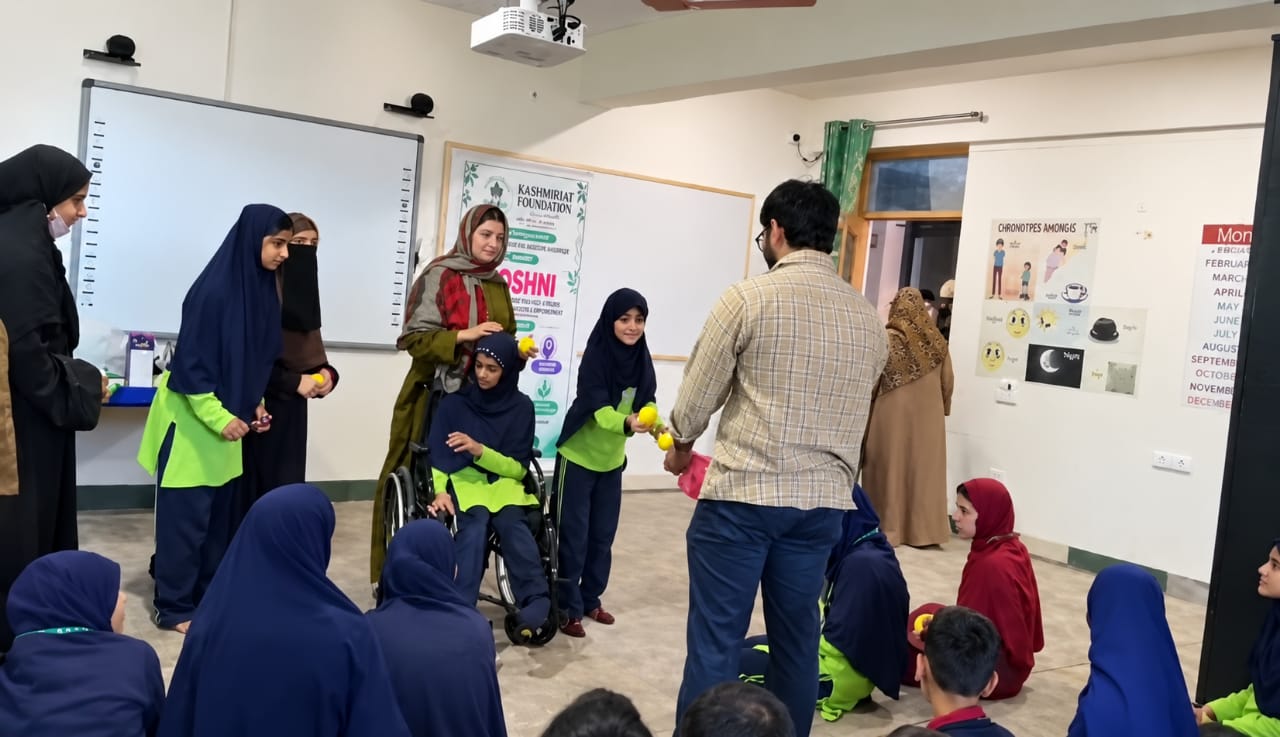
We then began our discussion on child safety and personal boundaries. We spoke about good touch and bad touch in a simple and age-appropriate way, helping the students understand that their bodies belong to them and that they have the right to feel safe. We talked about recognizing situations that make them uncomfortable, saying no when something does not feel right and reaching out to a trusted adult whenever they need help.
For us, this conversation was not about creating fear. It was about giving children the knowledge and confidence they need to understand their boundaries and protect themselves.
We then moved to another very important part of the session — menstrual health and hygiene.
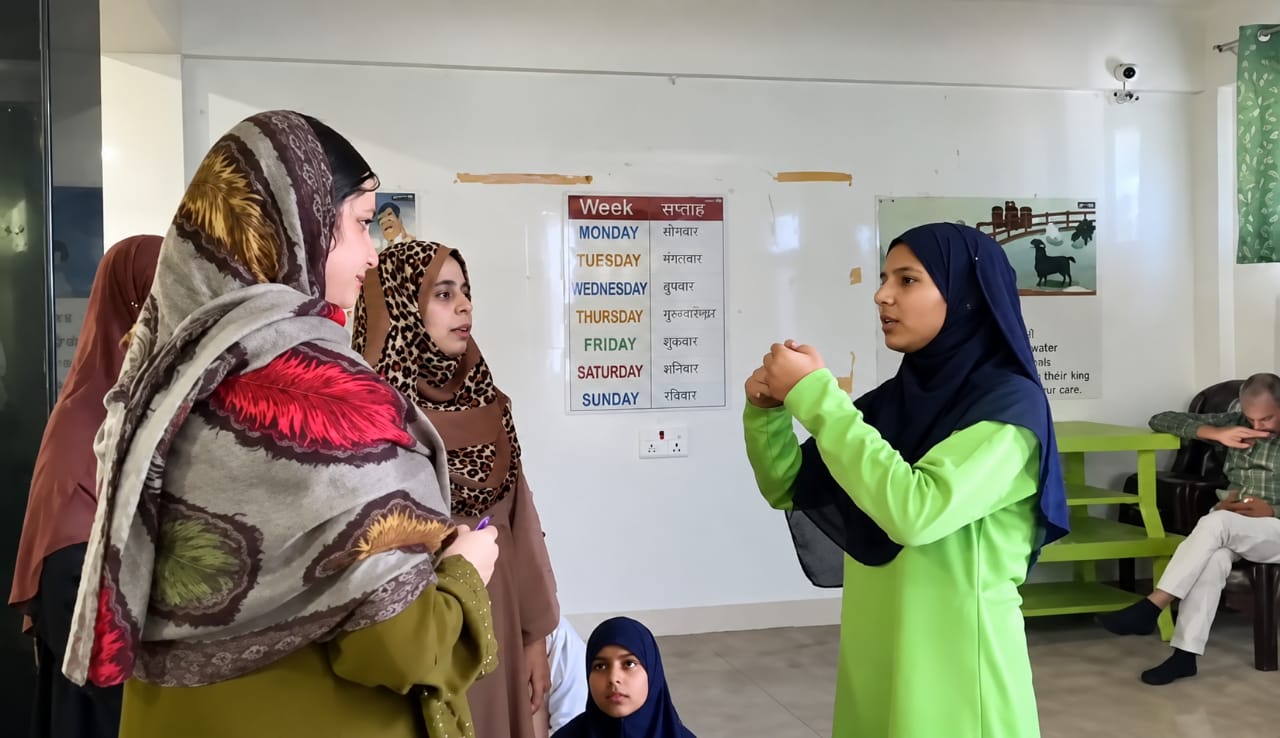
Our female team members spoke with the girls about periods, the changes that happen during growing up, menstrual hygiene and taking care of themselves during their periods. We talked about keeping clean, changing menstrual products regularly and making sure that the products are used and cared for hygienically.
We also introduced the girls to reusable sanitary napkins. We explained how they can be used, washed, dried properly and stored so they can be reused safely. We wanted the girls to understand not only the product itself, but also how important it is to take care of their menstrual health with confidence and dignity.
Menstrual health education should be accessible to every girl, including girls with disabilities. A disability should never become a barrier to receiving information about one’s own body, health or hygiene. Every young person deserves the opportunity to understand what is happening to their body and to ask questions in a safe and respectful environment.
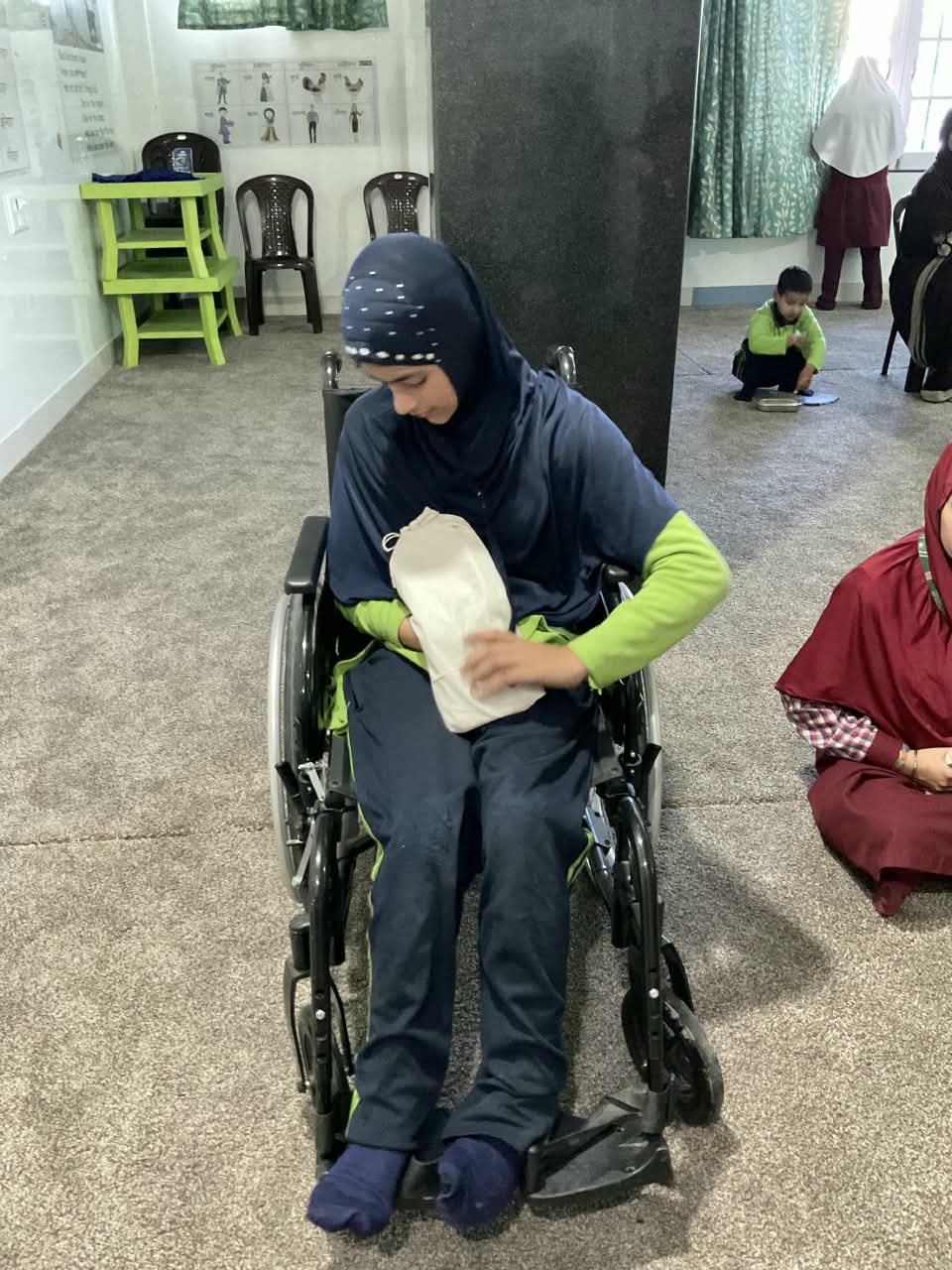
What made the day particularly meaningful for us was seeing the different ways in which the students participated. Some communicated through words, some through gestures and expressions, and everyone had their own way of being part of the session.
It reminded us that communication does not always look the same, but every voice deserves to be heard.
We tried to make the session as comfortable and inclusive as possible, giving the students time to participate in their own ways. Their smiles, curiosity and enthusiasm made the experience even more special for our team.
At the end of the session, we gave the girls reusable sanitary napkins to take with them. Along with the products, we hope they also carried home something more important — a little more knowledge, confidence and comfort in understanding their own bodies.
Looking back, what we remember most is not simply the topics we discussed. We remember the smiles, the laughter, the small interactions and the warmth we received from the students.
We went to Zaiba Appa to share knowledge, but we also came back with a beautiful reminder: when we create spaces where everyone is included, even a simple conversation can become meaningful.
For Kashmiriyat Foundation, inclusion means making sure that conversations about health, hygiene, safety and growing up reach every child — without barriers.
Every child deserves access to information that helps them understand their body, protect their health, recognize their boundaries and grow up with dignity.
And every child deserves to know that their safety, their health and their voice matter.
A small message from our team
Health education should have no barriers. Safety should have no exceptions. Every child deserves the knowledge, dignity and confidence to understand themselves and feel safe.
We are grateful to the Zaiba Appa Institute of Inclusive Education, its team and all the students for welcoming us and making this day so memorable. ❤️
Kashmiriyat Foundation
For a safer, healthier and stronger Kashmir
About Zaiba Aapa
The institute takes its name from Zaiba Banoo, a woman from Bijbehara who married into the Tak family and spent her life caring for people who had nowhere else to turn. At 25, she learned a herbal treatment for burns and used it for years to heal children injured by kangris during Kashmir’s harsh winters, when hospitals were scarce and snow made travel harder still. She cooked extra meals for families who needed them and quietly paid school fees for children who couldn’t afford to attend. By the time she was 50, the whole community around Saraf Mohalla simply called her Zaiba Aapa.
The institute built in her name, run by the Humanity Welfare Organisation “Helpline,” is now a day care school for 85 children with hearing, visual, intellectual, and orthopaedic disabilities. It offers special education, sign language and Braille instruction, physiotherapy and speech therapy, vocational and computer training — including screen-reading software for visually impaired students and iPads that have helped autistic students build eye contact and focus. For children too immobile to reach the school, the team travels to their homes each week to continue physiotherapy and train family members to carry it on between visits.
Watch the day unfold
A glimpse of the moments, conversations and smiles from our visit.